Skip “Contemplative Outreach”

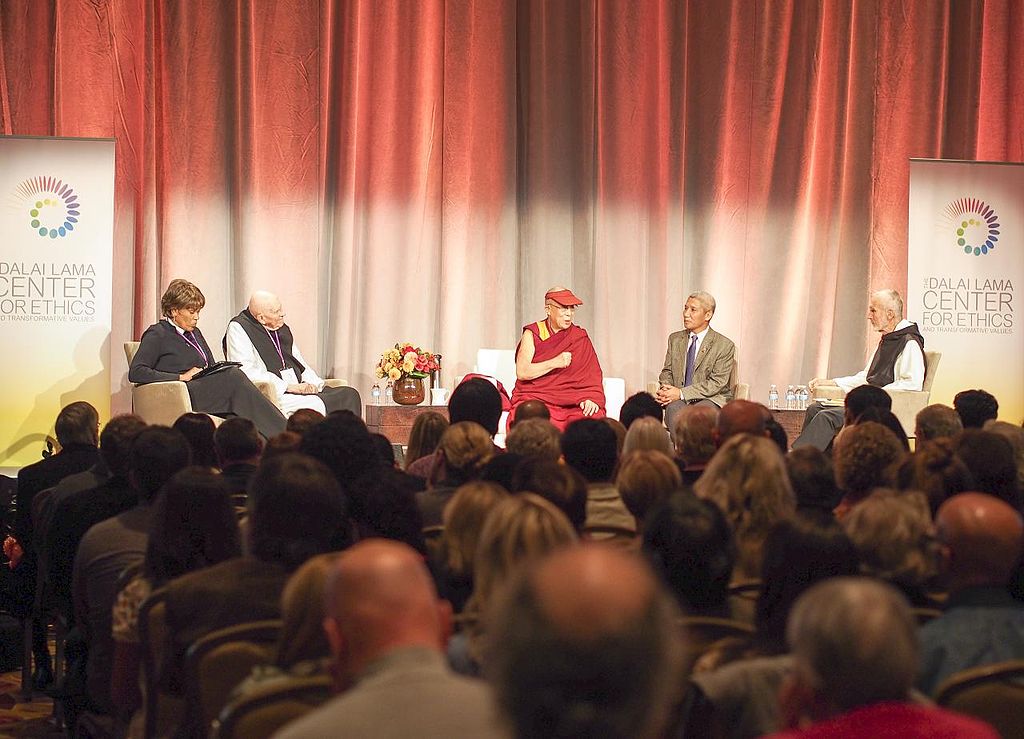
Thomas_Keating,_the_Dalai_Lama_and_David_Steindl-Rast_in_Boston_2012
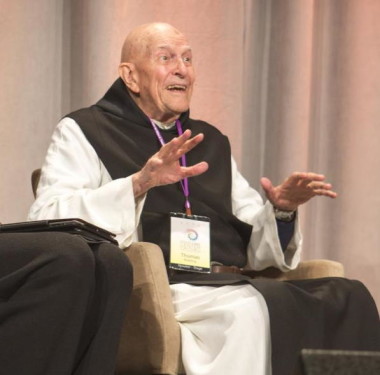
Fr. Thomas Keating and the Dalai Lama in Boston in 2012. (Photo by Christopher, Wikimedia Commons)

This post analyzes the latest newsletter of Contemplative Outreach Chicago (March 2018). Contemplative Outreach is the organization co-founded by Fr. Thomas Keating and David Frenette and others to promote and teach Centering Prayer. Sometimes it’s difficult to see what is wrong with the method of Centering Prayer. The problems with the Centering Prayer movement become clearer when we consider the theology associated with it, as well as the other New Age teachings, heterodoxy, and political liberalism that the organization promotes.

Here are seven problems found in this short newsletter. They cast serious doubt on the organization’s claim to be teaching Christian prayer.

1. Gnosticism

Wisdom of the Gospel of Thomas: Although the newsletter reveals that the Gospel of Thomas was discovered at Nag Hammadi, it blatantly lies when it says, “Scholars are in general agreement that it is a legitimate text that is consistent with the canonical gospels.” The Gospel of Thomas is a Gnostic text. Gnosticism was one of the major heresies in the early Church. When the Congregation for the Doctrine of the Faith (CDF) wrote its authoritative document On Some Aspects of Christian Mediation, it identified pseudo-gnosticism as one of the two “fundamental deviations” behind “erroneous ways of praying” (no. 8).

2. Neighbor = Self?

“Learning who you truly are is the work of the method of Centering Prayer.  Our invocation from Jesus is to love our neighbor as ourself, not as much as ourself,” writes Alan Krema.

In other words, according to the Contemplative Outreach Chicago Coordinator, we love our neighbor because our neighbor and ourselves are at heart indistinguishable. We are in “Union,” which in this case means “you” and “I” are basically two different words for the same thing. This is an instance of non-dualism – also known as monism. Non-dualism/monism teaches that everything is one. Monism was condemned as a heresy at Vatican I:

“If anyone shall say that the substance and essence of God and of all things is one and the same; let him be anathema. “

This heresy is commonly taught by Fr. Keating and Contemplative Outreach.

Loving your neighbor is meaningless, if your neighbor is not a real person separate from yourself. What you are then loving is not your neighbor at all, but the “Ultimate Reality” of which you and he are only shallow manifestations. There is no person at all in the philosophy. No one to love, no one to be loved. There is no “you” to love anyone.

The second greatest commandment thus becomes a mere statement of Eastern religious thought.

3. The Enneagram

Contemplative Outreach is enamored of the Enneagram.

What is the Enneagram?  Although it has some surface similarities to classic temperament theories, it is widely recognized as an unscientific, New Age tool. In fact, it was mentioned by name in the Vatican document Jesus Christ, Bearer of the Water of Life: a Christian reflection on the “New Age.”  The Enneagram

“when used as a means of spiritual growth introduces an ambiguity in the doctrine and the life of the Christian faith.” (no. 1.4)

4. Retreat with Nancy Sylvester

Nancy Sylvester “is the former President of the Leadership Conference of Women Religious (LCWR)”. This organization had so many problems that it underwent a Vatican investigation earlier this decade. The result can be read here:

The organization NETWORK, of which she has also been a leader, has been called out for problems as well.

But most problematic is the organization she founded, The Institute for Communal Contemplation and Dialogue. Its website is replete with New Age teaching, including using Hindu mandalas at retreats, “re-imagining” the Creation Story, and the adulation of Cynthia Bourgeault’s non-dualist theology. Sylvester calls us to “exercise contemplative power” to bring about, among other things, “ecclesial transformation.” Which appears to be a sophist way of saying “changing the Church to our liking.”

5. Beth O’Brien

Beth O’Brien, who will lead the “Midwest Wisdom Schools” advertised, writes in her biography on her website:

“Inspired by Teilhard de Chardin’s writing on human energy and convergence, she continues to seek an ever-deepening knowing within an evolutionary and incarnational (embodied) spirituality.”

6. Religious Indifferentism

Phil Jackson, former president of Contemplative Outreach Chicago, shares his adventure of backpacking alone in the West. In his reflection, he refers to Abraham, Jesus, Mohammed, and Buddha as though they are all worthy of the same level of respect, although they represent diverse religions and only one of them claimed to be (and was in fact) God.

7. Vibrations of God?

But, as often, the quote from Fr. Thomas Keating crowns it all. It begins:

We’re all like localized vibrations of the infinite goodness of God’s presence.”

Say what?

This issue of the newsletter of Contemplative Outreach Chicago is typical of other issues I have read, and the newsletter of Contemplative Outreach, Ltd. It is full of New Age thought, religious indifferentism, the monist heresy, and the just plain weird. There is very little of the Gospel, although the organization claims Centering Prayer is just a modern version of the prayer of the saints.
Centering Prayer and the CDF, Part 3

Tiepolo,_Giambattista_-_Virtue_and_Nobility_putting_Ignorance_to_Flight_-_Google_Art_Project
Virtue and Nobility Putting Ignorance to Flight by Tiepolo (Wikimedia Commons).

We continue going through the document Orationis formas (On Some Aspects of Christian Meditation), comparing its cautions with the teaching of Fr. Thomas Keating, Contemplative Outreach, and other leaders of the Centering Prayer movement.

Let’s return to pseudognosticism, which we began discussing in Part 2. As in this whole series, quotes from Church documents and saints and Fathers are in purple. Quotes from Centering Prayer practitioners are in green.

Footnote no. 8 of Orationis formas explains:

“Pseudognosticism considered matter as something impure and degraded which enveloped the soul in an ignorance from which prayer had to free it, thereby raising it to true superior knowledge and so to a pure state…”

How do Centering Prayer advocates view matter?

Matter and spirit

Fr. Keating writes in The Mystery of Christ:

“By becoming a human being Christ annihilated the dichotomy between matter and spirit.  In the Person of the Divine-Human Being, a continuum between the divine and the human has been established.  Thus, God’s plan is not only to spiritualize the material universe, but to make matter itself divine.  This he has already done in the glorified humanity of his Son.  The grace bestowed on us by the Ascension of Jesus is the divinization of our humanity.  Our individuality is permeated by the Spirit of God through the grace of the Ascension and more specifically through the grace of Pentecost.  Thus we, in Christ, are also annihilating the dichotomy between matter and spirit.  Our life is a mysterious interpenetration of material experience, spiritual reality and the divine Presence.”

Typically, Fr. Keating’s words tangle truth and error.  Jesus united God and man in one Person. He united Spirit with flesh, Creator with creature. Through His Passion we are able to attain union with God as well. We will (and already do to some extent) “partake in the divine nature” (see 2 Pet 1:4).

But is it correct to say that “Christ annihilated the dichotomy between matter and spirit?” Fr. Keating, as we saw in an earlier post, believes that “contemplation resolves all dichotomies.” This is non-dualism. Non-dualism is not a Christian concept. Christianity believes in opposites: evil truly is the rejection of good, not just a word we use for things that make us uncomfortable. Jesus does not blend matter and spirit. He does not erase the difference between them. He was and is fully God and fully man, not a hybrid.

The idea that Jesus’ divinity and humanity were somehow blended together is actually an ancient heresy. As the Second Council of Constantinople decreed:

“We think that God the Word was united to the flesh, each of the two natures remaining what it is. This is why Christ is one, God and man; the same, consubstantial (homoousios) with the father as to the divinity and consubstantial with us as to the humanity.”

Neither the flesh nor the spirit is annihilated. Nor are they mixed. There is not, nor could there ever be, “a continuum between the divine and the human.” (More on that in a future post.)

The Catechism enumerates the early heresies concerning Christ’s two natures:

“The first heresies denied not so much Christ’s divinity as his true humanity (Gnostic Docetism)…

“The Monophysites affirmed that the human nature had ceased to exist as such in Christ when the divine person of God’s Son assumed it…” (nos. 464 and 467)

And then the Catechism clinches it, bringing us back to Fr. Keating’s assertions and their opposition to the teaching of Orationis formas:

“Because ‘human nature was assumed, not absorbed’, in the mysterious union of the Incarnation, the Church was led over the course of centuries to confess the full reality of Christ’s human soul, with its operations of intellect and will, and of his human body. In parallel fashion, she had to recall on each occasion that Christ’s human nature belongs, as his own, to the divine person of the Son of God, who assumed it. Everything that Christ is and does in this nature derives from ‘one of the Trinity’. The Son of God therefore communicates to his humanity his own personal mode of existence in the Trinity. In his soul as in his body, Christ thus expresses humanly the divine ways of the Trinity:

“‘The Son of God. . . worked with human hands; he thought with a human mind. He acted with a human will, and with a human heart he loved. Born of the Virgin Mary, he has truly been made one of us, like to us in all things except sin.'” (CCC no. 470, quoting Gaudium et Spes)

The Incarnation does not “annihilate the dichotomy between matter and spirit.” Instead, it unites matter and spirit. It allows us to be united with God in our intellect, our will, and even our body. We are not fully human without our bodies–thus, the Resurrection of the Dead. We will not be ghosts in Heaven. Nor will we be angels.

Christ sanctified matter. He did not “set us free” from it. He freed us from sin’s hold over matter. Now we can think, love, eat, and drink in union with God and for His glory.

Pseudognostic knowledge

Does Centering Prayer teach that the human soul is “in an ignorance from which prayer had to free it, thereby raising it to true superior knowledge and so to a pure state?” Yes!

Reporting on an interfaith dialog the Trappist monks conducted with other Christians, Native Americans, Buddhists, Hindus, Muslims, and others, Fr. Keating listed eight points of agreement among participants. Here is one of them:

“As long as the human condition is experienced as separate from Ultimate Reality, it is subject to ignorance and illusion, weakness and suffering.”

In other words, for Fr. Keating separation from God is an illusion born of ignorance. If only we would recognize our oneness with God, suffering would cease!

But this is not the Christian view. Although man could not even exist without God holding him in existence, God calls us to a much deeper union with Himself that sin prevents. Weakness and suffering are clues to reality. They teach us that something is terribly wrong. We suffer because man as a species rejected the true path to union with God, desiring to be “like God” while living in disobedience to Him. In this sense, separation from God is a reality. Recognizing this reality is fundamental to redemption. Christ came to solve this problem. It is no illusion!

Perhaps the most basic idea underlying Centering Prayer is that we need to have a new awakening, a new consciousness. In his book Open Mind, Open Heart, Fr. Keating defines transformation as:

“a restructuring of consciousness in which the divine reality is perceived to be present in oneself and in all that is.”

Of course, there is a sense in which God is present in oneself and all creation. But ignorance is not our most basic problem. Sin is. When we make overcoming ignorance the central problem of the spiritual life, we inhibit true transformation, in which God changes our actions and desires, in which He makes us holy.

Let me sum up what I’ve been saying by returning to Orationis formas, as it speaks of the the resurgence of pseudognosticism and another early heresy on prayer:

“Both of these forms of error continue to be a temptation for man the sinner. They incite him to try and overcome the distance separating creature from Creator, as though there ought not to be such a distance; to consider the way of Christ on earth, by which he wishes to lead us to the Father, as something now surpassed; to bring down to the level of natural psychology what has been regarded as pure grace, considering it instead as ‘superior knowledge’ or as ‘experience.’

“Such erroneous forms, having reappeared in history from time to time on the fringes of the Church’s prayer, seem once more to impress many Christians, appealing to them as a kind of remedy, be it psychological or spiritual, or as a quick way of finding God.” (OF, no. 10)

Can anyone still maintain that Orationis formas was not directed towards practices like Centering Prayer?

We will continue next time by examining more fully the purpose of Christian prayer as explained in this document.

Read Part 1 of this series here.
Read Part 2 of this series here.


Centering Prayer and the CDF, Part 1

Budda_Siakiamuni
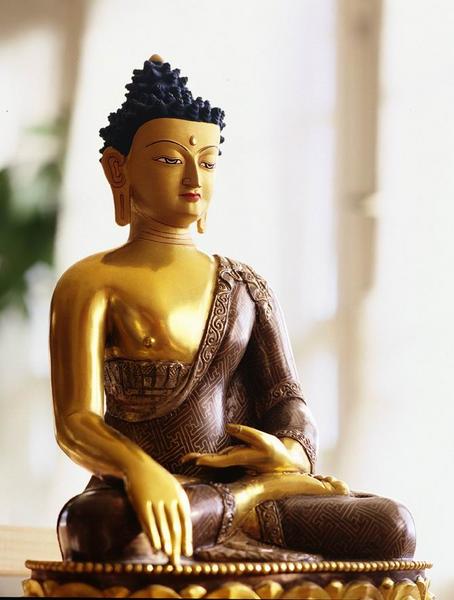
Buddha Siakianuni (photo by Boryzo, Wikimedia Commons). Is Centering Prayer inspired by eastern religions?

In 1989, the Congregation for the Doctrine of the Faith (CDF) issued Letter to the Bishops of the Catholic Church on Some Aspects of Christian Meditation. Cardinal Ratzinger, later Pope Benedict XVI, signed the document. The Latin title is Orationis formas (OF). Its purpose:

“[M]any feel the need for sure criteria of a doctrinal and pastoral character which might allow them to instruct others in prayer, in its numerous manifestations, while remaining faithful to the truth revealed in Jesus, by means of the genuine Tradition of the Church. This present letter seeks to reply to this urgent need, so that in the various particular Churches, the many different forms of prayer, including new ones, may never lose their correct personal and communitarian nature.” (OF no. 1)

It goes on to detail several problems found in modern prayer methods.

Some Aspects of Christian Meditation does not mention any problematic practices by name. Instead, it gives general principles by which the bishops are to help reform prayer movements to bring them into line with the faith.

Contemplative Outreach, the official promoter of Centering Prayer, claims that the document was not addressing Centering Prayer. In this series, which will span several posts, we will examine many points made by the CDF and compare them to statements made by Contemplative Outreach, Fr. Thomas Keating, or other prominent Centering Prayer practitioners. Since these posts will be loaded with quotes, I have decided to color code them to help distinguish which document is being cited. Quotes from the CDF appear below in purple. Quotes from Contemplative Outreach and Fr. Keating, et. al., appear in green.

Non-Christian meditation

Orationis formas begins by addressing the influence of non-Christian religions on new prayer methods:

“The ever more frequent contact with other religions and with their different styles and methods of prayer has, in recent decades, led many of the faithful to ask themselves what value non-Christian forms of meditation might have for Christians… Observing that in recent times many traditional methods of meditation, especially Christian ones, have fallen into disuse, they wonder whether it might not now be possible, by a new training in prayer, to enrich our heritage by incorporating what has until now been foreign to it.” (OF no.2)

Response from the Contemplative Outreach FAQs page:

“Cardinal Ratzinger’s ‘Letter to the Bishops of the Catholic Church on Some Aspects of Christian Meditation’, written in 1989, was not directed to Centering Prayer, which is the traditional form of Christian prayer, but rather at those forms of meditative practices that actually incorporate the methods of Eastern meditations such as Zen and the use of the Hindu mantras. The letter is chiefly concerned with the integration of such techniques into the Christian faith.” (My emphasis)

Is this characterization correct? Orationis formas never uses the word “mantra.” The first footnote in the document does mention Hinduism and Zen, however, in this way:

“The expression ‘eastern methods’ is used to refer to methods which are inspired by Hinduism and Buddhism, such as ‘Zen,’ ‘Transcendental Meditation’ or ‘Yoga.’ Thus it indicates methods of meditation of the non-Christian Far East which today are not infrequently adopted by some Christians also in their meditation.” (My emphasis)

Now, I would say that the phrase “methods inspired by” eastern religions is not as restrictive as “forms of meditative practices that actually incorporate the methods of Eastern meditations…” This interpretation can be refuted, but the footnote goes on to say:

“The orientation of the principles and methods contained in this present document is intended to serve as a reference point not just for this problem, but also, in a more general way, for the different forms of prayer practiced nowadays in ecclesial organizations, particularly in associations, movements and groups.”

In other words, the CDF is concerned with any forms of prayer that exhibit certain problematic elements, even those that may have not been consciously inspired by non-Christian religions.

So, on this point, Centering Prayer is not off the hook. In looking at Orationis formas we need to examine whether the Centering Prayer method contains problematic elements, rather than ask what the origin of those elements is.

Even so, I find this sentence from OF no. 2 interesting, given the many discussions I have had with Centering Prayer practitioners:

“Other Christians, caught up in the movement towards openness and exchanges between various religions and cultures, are of the opinion that their prayer has much to gain from these [eastern] methods.”

Repeatedly, Centering Prayer practitioners refer to the teaching of Vatican II’s Nostra Aetate  that  the “Catholic Church rejects nothing that is true and holy in these [foreign] religions.” They also accuse me and others who reject Centering Prayer of “fearing” the eastern influence found in Centering Prayer. In fact, I hear words similar to these frequently, “Christian prayer has much to gain from eastern religions.”

So here the Contemplative Outreach FAQs contradict the arguments of many Centering Prayer advocates.

Now let us move on to the actual cautions of the CDF document and see how they apply to Centering Prayer.

It’s personal

What is prayer? The CDF states:

“For this reason, [prayer] is defined, properly speaking, as a personal, intimate and profound dialogue between man and God. It expresses therefore the communion of redeemed creatures with the intimate life of the Persons of the Trinity. This communion, based on Baptism and the Eucharist, source and summit of the life of the Church, implies an attitude of conversion, a flight from ‘self’ to the ‘You’ of God.”(OF no. 3)

Centering Prayer rejects the idea of “a flight from ‘self’ to the ‘You’ of God.” Here are a two examples that demonstrate the error.

Fr. Keating writes:

“God and our true Self are not separate. Though we are not God, God and our true Self are the same thing” (Open Mind, Open Heart, 2oth Anniversary edition, p. 158).

In this YouTube video he makes the point even clearer, saying that “You and the Other [meaning God] are one, always have been…”

How can you fly from yourself to God if you are already one with God?

The communion Fr. Keating proposes is not based on Baptism and the Eucharist. If we have always been one with God, what difference do the sacraments make? For Fr. Keating, the significant difference is one of consciousness, for he says that through Baptism:

“our sense of separation from God and from others is destroyed.” (ibid. 159)

Notice, it is not a real separation from God that Baptism overcomes, in Fr. Keating’s view, just “our sense” of it. In other words, our communion with God is not based on Baptism.

What about the Eucharist? Fr. Keating writes:

“The Eucharist is the celebration of life: the coming together of all the material elements of the cosmos, their emergence to consciousness in human persons and the transformation of human consciousness into Divine consciousness…” (Open Mind, Open Heart, p. 128)

Frankly, I’m not sure what Fr. Keating is talking about here, but we see again the emphasis on a change of consciousness, rather than moral conversion.

Where there are no separate people there can be no dialog. It’s no surprise, therefore, that no communication takes place in Centering Prayer. Without words, concepts, ideas, or images, how does one speak to God? While turning away from inspirations and feelings, and making no use of Sacred Scripture or the truths of the faith, how does one listen to God? No speaking and no listening means no dialog.

Now, it’s true that communication between God and the soul can take place at a level beyond words, concepts, and feelings in infused contemplation. Nevertheless, if there is no exchange on some level, there is no dialog. Awareness is not dialog, especially when that awareness is not about someone who is essentially other than oneself.

Christian prayer involves (at least) two persons. Jesus is a Person, God the Son. Christian prayer goes to God through Him, although it often addresses the First or Third Person of the Holy Trinity. Prayer is addressed from a person to a separate Person (or the other way around; God also communicates with the soul during prayer).

Without a “personal, intimate, and profound dialog,” the CDF says there is no Christian prayer. Therefore, Centering Prayer is not Christian prayer, whatever else it may be.

We will continue next week with Part 2 of this series.

Moving beyond good and evil

Much of the discussion about Centering Prayer appears mundane. What’s the big deal anyway? Why can’t people just pray however they want? Even I sometimes question whether I could spend my time better than in challenging these teachings. Then along comes a statement from a Centering Prayer “guru” that is so outrageous it puts everything into perspective. Such a statement was shared with me today.

Watch this video, which was released last month by the Garrison Institute, for which Fr. Thomas Keating is a spiritual adviser. Pay close attention from about 45 seconds until 1 minute 6 seconds. He’s a bit hard to hear and understand, so turn your volume all the way up.

Now, did you catch that?

Fr. Keating said that contemplation “moves beyond [the] dichotomy” of good and evil, that “all the opposites are resolved” by it.

What is he talking about? Is he right? Is this what Christian contemplation does?

Absolutely not! In fact, this statement alone is so far outside the teaching of the Catholic faith that it should open the eyes of every Christian who has been told that Centering Prayer is in the same category of prayer that the saints practiced.

The Pontifical Council for Culture and the Pontifical Culture for Religious Dialogue wrote:

“In New Age there is no distinction between good and evil. Human actions are the fruit of either illumination or ignorance. Hence we cannot condemn anyone, and nobody needs forgiveness. Believing in the existence of evil can create only negativity and fear.” (Jesus Christ, the Bearer of the Water of Life: A Christian Reflection on the ‘New Age,’ 2.2.2)

Fr. Keating’s teaching is New Age, not Christian.

Good and evil are real!

The Catechism repeatedly and unabashedly teaches the dichotomy of good and evil. For example:

“Human acts, that is, acts that are freely chosen in consequence of a judgment of conscience, can be morally evaluated. They are either good or evil.” (No. 1749)

And

“There are concrete acts that it is always wrong to choose, because their choice entails a disorder of the will, i.e., a moral evil. One may not do evil so that good may result from it.” (No. 1761)

Becoming aware of God’s presence within oneself is a key component of Centering Prayer. Yet here is how the Catechism speaks of God’s presence in the soul:

“Deep within his conscience man discovers a law which he has not laid upon himself but which he must obey. Its voice, ever calling him to love and to do what is good and to avoid evil, sounds in his heart at the right moment. . . . For man has in his heart a law inscribed by God. . . . His conscience is man’s most secret core and his sanctuary. There he is alone with God whose voice echoes in his depths.” (No. 1776)

In other words, the innermost sanctuary of man, his “inner core” where he meets with God is his conscience! He must obey the law of God written in his heart. There can be no communion with the indwelling God without acknowledging the difference between good and evil, rejecting evil, and choosing good.

Centering Prayer suggests that good and evil are not real, but only constructs that a person moves beyond as he grows spiritually. Such a teaching mocks the doctrine of Original Sin. If no choice is good as opposed to evil, no choice has moral value. No choice can separate a person from God.

What about Original Sin?

Unsurprisingly, given this latest statement, Fr. Keating’s view of Original Sin is problematic. In Open Mind, Open Heart, he defines Original Sin as:

“A way of explaining the universal experience of coming to full reflective self-consciousness without the inner conviction or experience of union with God.”(20th Anniversary Edition, p. 189)

Thus his rejection of “the dichotomy of good and evil” makes perfect sense in the context of his theology. For Fr. Keating, good and evil are illusions. Original Sin is an illusion. What man needs, according to Fr. Keating, is a change of consciousness. Redemption is meaningless; what are we to be redeemed from? Who is to redeem us? After all, Fr. Keating has also said that the distinction between God and the soul is an illusion. If our “true self” is God, all we need to do is tap into that true self by ignoring our conscious thoughts and feelings and changing our inner convictions. We do not need to journey towards union with God in this view. We already are in union with God. We just don’t know it!

Only the truth heals

In contrast, the USCCB writes of sin and redemption:

“We cannot speak about life in Christ or the moral life without acknowledging the reality of sin, our own sinfulness, and our need for God’s mercy. When the existence of sin is denied it can result in spiritual and psychological damage because it is ultimately a denial of the truth about ourselves. Admitting the reality of sin helps us to be truthful and opens us to the healing that comes from Christ’s redemptive act.” (Excerpt from the United States Catholic Catechism for Adults,  as found on the USCCB website)

Far from healing our wounds, rejection of the reality of sin causes us further damage. This rejection of reality does not destroy a false self–it creates one! If we desire healing, we must bring the wounds of sin to Christ and receive His mercy.

No good and evil, no sin, no redemption, no mercy. Yet the Holy Father Pope Francis has declared this the Year of Mercy.

Practicing Centering Prayer brings a false peace by denying that the conflict within ourselves and in our world has any meaning. We are told to simply “detach” from our thoughts and feelings about it, to move beyond opposites such as good/evil and God/man. We are told to go beyond them, to a deeper level, beyond reason, beyond feeling, beyond imagination.

This latest video demonstrates that doing so means going beyond the boundaries of our faith in Christ. May I also say it is beyond the pale?

Open Mind, Open Heart by Fr. Thomas Keating: a Review


This post originally appeared at DetailThomasKeatingDiscussionWithTheDalaiLamaBoston2012-380x375SpiritualDirection.com with a different title. It has been slightly edited.

Trappist Abbot Thomas Keating is the premier promoter of the practice of Centering Prayer. His book Open Mind, Open Heart, first published in 1986, has sold over half a million copies. Is this book a good resource for growth in prayer? Can I trust Fr. Thomas Keating as a guide to the spiritual life? In this post we’ll take an in-depth look at this book and the theology behind it.

Fr. Keating, like all those who promote and teach Centering Prayer, claims to follow the tradition of Teresa of Avila, John of the Cross, Thérèse of Lisieux, and others. However, in his book he provides no evidence to back up this claim. He quotes none of these saints. In fact, he has very few quotes from any Catholic sources and none that give us their complete context.

In the introduction, Keating describes Centering Prayer as a “specific method of awakening the gift of contemplation” (page ix).* In contrast, the Carmelite saints rarely speak of techniques or methods of prayer. Instead, they urge a life surrendered to Christ. In order to avoid such criticism, Centering Prayer advocates insist they are not teaching a “technique” but a “method.” They seem to think that substituting the synonym “method” for “technique” solves the issue. It does not.

The real problem lies in the idea that we can attain to infused contemplation by following a set of steps in our prayer time, thus making states of consciousness more central than Christ. Such an idea is antithetical to the teaching of the Carmelite saints. Humility, perseverance in prayer and virtue, and faithfulness to God’s grace throughout the day–supported by growing detachment to created things–are what constitute the necessary preparation for contemplative prayer.

Throughout Open Mind, Open Heart, Fr. Keating over-emphasizes the soul’s role in attaining contemplation. I expected this would be the case from what I already knew about Centering Prayer. What surprised me were the many theological errors I found–some of them egregious. To be fair, a few of Fr. Keating’s descriptions of how the soul should behave during Centering Prayer are very close to orthodox teaching about acquired contemplation–the final stage of prayer in the Purgative Way. But we must remember the adage lex orandi, lex credendi–prayer is the expression of what we believe. Bad prayer methods and bad theology reinforce each other.

I cannot address every error in the book in a blog post, so I will confine myself to those that are most troubling. Let’s look at Keating’s teaching about the nature of God, man, sin, redemption, and the proper focus of our prayer.

1. Who is God?

Perhaps the greatest error, and the one most widely known, is Fr. Keating’s blurring of the distinction between God and man. Accused of pantheism, he and other Centering Prayer advocates respond that they teach panentheism. Panentheism covers many different spiritualities, some more problematic than others. Fr. Keating specifically teaches non-dualism. Non-dualism contradicts true Catholic spirituality. Here is just one quote among many that shows the problem:

“God and our true Self are not separate. Though we are not God, God and our true Self are the same thing” (158).*

In orthodox Catholic teaching, even at the highest stages of union with God, the soul always remains a distinct personality.

Another problem centers on our ability to know God. Fr. Keating writes that we don’t know exactly who or what God is (41),* and as we mature in faith, we do not even want to know (66).* This is repudiated by such Scripture passages as this:

“Beloved, we are God’s children now; what we will be has not yet been revealed. What we do know is this: when he is revealed, we will be like him, for we will see him as he is.” (1 John 3:2)

In other words, we do not fully understand God now, but our spiritual transformation entails knowing Him as He is. Our desire to know Him, as well as our understanding itself, move in the opposite direction that Fr. Keating proposes.

2. Who is Man?

Writing about the method of Centering Prayer, which involves letting thoughts slip past your mind without taking notice of them, Fr. Keating says the method prepares one to accept that “when the body slips away from the spirit, no great change is going to take place” (53).* He does not elaborate, but he is obviously speaking of death, the separation of the soul from the body. If death brings “no great change,” why do we need a resurrection? The body is an essential part of the human person. And, we profess the resurrection of the body in the Creed every Sunday at Mass, and every time we pray the Rosary.

3. Sin and Redemption

Fr. Keating writes that the main thing separating us from God “is the thought that we are separated from Him” (33).* This same error shows up in his discussion of Baptism, in which he says “our sense of separation from God and from others is destroyed” (159)* and is in his definition of Original Sin, wherein he repeats the error that separation from God is an illusion. Of course, separation from God due to sin is a reality (cf Catechism of the Catholic Church, paragraphs 1849-1850), not an illusion that we must be set free from.

How can we grow towards union with God? Fr. Keating says repeatedly that our thoughts and emotions are what primarily keep us away from Him. (See, for example, page 164.)*

4. The Focus of Prayer

Finally, Fr. Keating gets the focus of our prayer time entirely wrong. This may not seem like such a big deal, until one reads exactly what his error is. This is where the bad theology ends in a bad prayer method. The focus is completely off.

Fr. Keating writes, “The method consists of letting go of every kind of thought during the time of prayer, even the most devout thoughts” (21).* He clearly states more than once that this includes every type of communication and inspiration coming from God Himself. He urges his followers to use a “sacred word” during prayer, but not only can that word be something completely secular if one chooses, Keating says that “the less the word means to you, the better” (40).*

Where is Christ in this prayer? He is not at the center of it. Fr. Keating, without any evidence to back up his assertion, states that God’s first language is silence, so that, if we attain silence, God will come and fill it (48).* (Elsewhere, Fr. Keating names St. John of the Cross as the origin of this quote about silence, but I have found no citation telling me where to find it in the saint’s writings and have not been able to locate it myself. If a reader can point me to the quote in St. John’s writings, I’ll amend this post.)  In contrast, we read in Scripture, “In the beginning was the Word, and the Word was with God. And the Word was God” (John 1:1). From all eternity, God has been speaking. The Word He speaks is God the Son. Jesus is God’s first and eternal language. If we are truly open to God in prayer, we will seek Him through His Son, not through a forced silence of the mind.

Elsewhere, Fr. Keating mentions Jacob’s dream of a ladder going up to heaven. Fr. Keating says the ladder “represents different levels of consciousness or faith” (90).* But in the Gospel, Jacob’s ladder represents Christ:

“[Jesus] said to [Nathanael] ‘…I say to you, you will see…the angels of God ascending and descending on the Son of Man.” (John 1: 51).

Some Closing Thoughts

In this post, we’ve examined some of the teachings about the nature of God, the nature of man, sin and redemption, and the focus of prayer according to Fr. Thomas Keating. We’ve demonstrated how Fr. Keating’s thought differs from authentic Catholic spirituality, by quoting from just a few of the many examples of error in his book Open Mind, Open Heart and showing how they differ from authentic Catholic spirituality. His text says a lot about how states of consciousness, in Centering Prayer, are more central than Jesus is.

Centering Prayer, as taught by Fr. Thomas Keating, is not traditional Christian prayer. It is based on a theology more influenced by Zen Buddhism and Transcendental Meditation than by the saints whose names Fr. Keating sprinkles throughout his text. It will not help a person prepare for infused contemplation. The evidence speaks for itself. My advice about Fr. Keating is to completely avoid his “theology”.

***

* Quotes from Open Mind, Open Heart are taken from the 20th Anniversary Edition (Bloomsbury: London, 2006).

Art: Detail from Thomas Keating, discussion with the Dalai Lama Boston 2012, “christopher”, 14 October 2012, CCA; L’Extase (The Ecstasy),